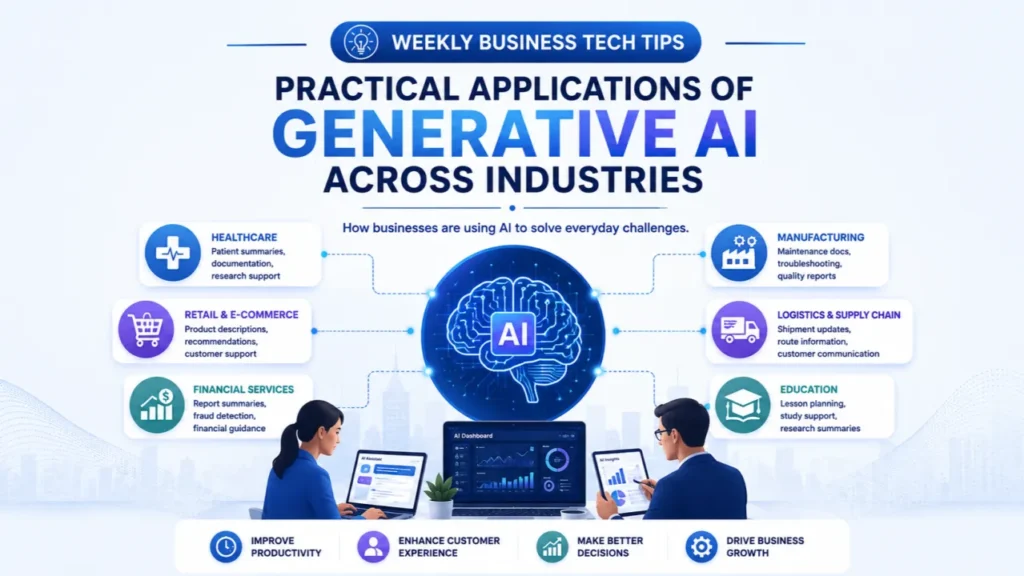
Artificial intelligence is most useful when it solves a clearly defined problem. A small, measurable trial is usually more valuable than adopting a tool simply because it is popular.
Most read
Start With a Specific Task
For practical ways to use generative ai for everyday research, begin with a clear goal and a realistic example. Give the system clear context, a defined output format, and examples of the quality you expect; vague instructions often produce vague results.
Right now
 How Repairability Can Shape the Future of Consumer Electronics
 A Practical Guide to Understanding Technology Hype
Choose the Right Level of Automation
Compare options using the same criteria instead of relying on a polished demonstration. Track time saved, error rates, and user satisfaction rather than judging success by how impressive a demonstration looks.
Check Quality Before You Trust It
Check the limitations before making this part of your routine. Give the system clear context, a defined output format, and examples of the quality you expect; vague instructions often produce vague results.
Keep People and Privacy in the Loop
Test the approach in a low-risk setting and note what changes. Track time saved, error rates, and user satisfaction rather than judging success by how impressive a demonstration looks.
Measure Whether It Helps
Review the results after real use, then keep, adjust, or replace the approach. Give the system clear context, a defined output format, and examples of the quality you expect; vague instructions often produce vague results.
For a useful comparison, define success before you begin and record any unexpected costs, risks, or compatibility issues. This makes your next decision more evidence-based.
Technology works best when it supports clear goals. Use these steps as a checklist, and adapt them to your budget, experience, and comfort level.

More articles by Admin.
History tracking
On the same subject
 How Small Businesses Can Use AI Automation Without a Big Budget
 How to Choose a Laptop That Fits Your Real Workload
 Simple Automation Apps That Can Give You Back Time
Right now
How Repairability Can Shape the Future of Consumer ElectronicsA Practical Guide to Understanding Technology Hype